Wednesday, August 26, 2020

Plant of the Week: Saponaria x lempergii 'Max Frei'

Want a long-blooming, low-growing easy-to-grow, winter-hardy perennial? Look no further than Soapwort, Saponaria x lempergii 'Max Frei'.


You may already be familiar with the spring-blooming Rock Soapwort (Saponaria ocymoides). I grew it years ago and loved its warm, pink flowers. But, as things go, I got rid of it. I don't remember exactly why. 

Saponaria ocymoides


Back in 2013, while perusing Digging Dog Nursery's website I found 'Max Frei.' I liked that it was a summer bloomer instead of spring and I knew exactly where I wanted to grow it.

I have it cascading over a small rock wall, with a similarly colored hardy Fuchsia called 'Pink Rain' nearby. 


The most challenging thing about this plant is trying to get my camera to capture the right color of the flowers. They're a more on the cool side. 


'Max Frei' starts blooming in early July and goes until late summer. It doesn't need deadheading. It just blooms and blooms.

When it's finally finished, I just cut the whole plant back.  Missouri Botanical Garden's website lists 'Max Frei' as being hardy in Zones 3-7 but I'm in Zone 8b and it does fine for me. I have it planted in morning sun and afternoon shade and I supply it with regular water. 

Are you growing this sweet plant?

Friday, August 7, 2020

Plant of the Week: Sanguisorba 'Lilac Squirrel'

After a rare--for August--rainy morning yesterday, most of the taller perennials are bowed over from weight of the raindrops. Especially annoying is the Phlox paniculata and if its flowers weren't so delectable to the swallowtail butterflies, I might be tempted to cut it all back. 

Sanguisorba hakusanensis 'Lilac Squirrel' isn't leaning as badly. And it is my plant of the week! Check out the flowers and you'll see why it is called 'Lilac Squirrel'.
 
 
This winter-hardy perennial (Zone 4a to 9b) starts out as a 12 inch wide basal clump with dark green, serrated, pinnate leaves.  

The green leaves belong to 'Lilac Squirrel'.  The leaves edged in white, to S. 'Dali Marble'


Starting in July, flowering stems rise to 4 or 5 feet (in my garden) and produce "bodacious pink boas" as Digging Dog Nursery in California calls them. 


 Aren't they fun? The typical height of the flowering stems is purported to be 24 inches so maybe it's my cramscaping that fuels their need to reach higher.


As you can see below, the "boas" eventually fade to a tawny color, at which point can be clipped off. 


Planted in a full sun or a mostly sunny spot, this plant will perform better with moist, freely draining soil. With its simple met needs, it will increase in size and "flower" production each year. I believe they make cute cut flowers too although I haven't attempted it.

Friday, July 24, 2020

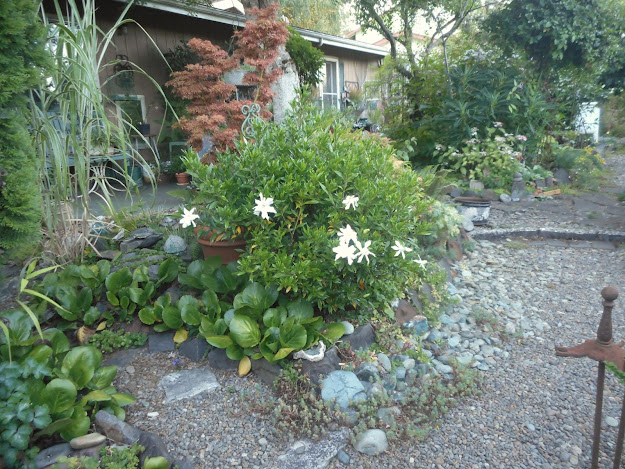
Plant of the Week: Gardenia jasminoides 'Frostproof'

When I was about four years old, I distinctly remember the magic of fragrant flowers. It was the face of a pansy flower's soft petals caressing my nose. One of my parents had planted a bunch of them in our front yard on the other side of the driveway. To this day, when I stick my nose in a pansy blossom, I'm that four year old once more.

Circa 1964, My little brother Ronnie and me

Fast forward six years and I'm in Hawaii, discovering good and bad things about life. The good things included fragrant flowers. I remember my mother taking us to visit one of her wealthy friends who lived in a beautiful house and garden on a hillside in Kailua, Kona. Included in the landscape was a ginormous, blossoming Gardenia bush.


Back in Oregon as an adult, my love of plants has never wavered and I continue to love a fragrant flower!


Years ago I bought a 'Kleim's Hardy' Gardenia, erroneously assuming that it would grow in Oregon since it was labeled "hardy." It didn't go well. I still longed for that Gardenia fragrance of my childhood and when Gardenia 'Frostproof' came on the scene I hesitated for fear of failure but in 2013, decided to go for it.


Of course, the following winter would be brutal with temperatures dipping low into the single digits. I tucked a blanket around my baby (one gallon) Gardenia and hoped for the best. And it lived!
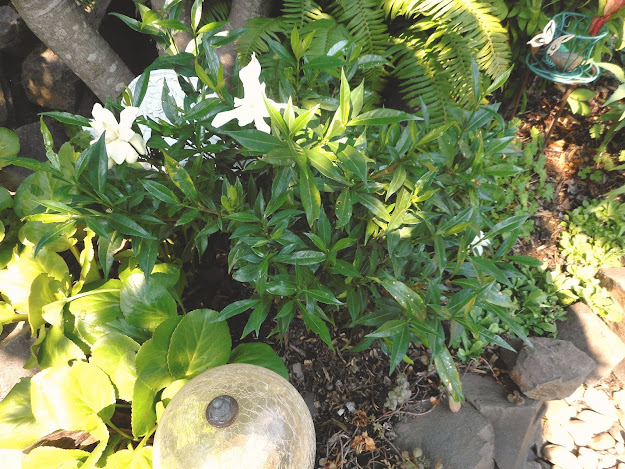
September 2014
 

The next year I was equally tentative of its survival and babied it with blankets during the coldest weather. But it survived and grew more!
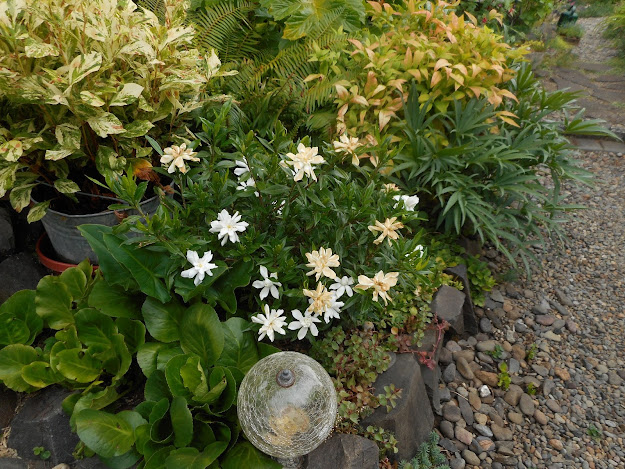
July 2015


July 2016

Neither of us could be happier.

July 2017


It usually starts blooming in July.

July 2018


By the end of the month, it is full bloom and will continue until frost.

July 25, 2018


July 2019
 

The flowers turn brown after a few days and it will improve the look of the plant if they are clipped off. I enjoy the task because of the yummy scent.

August 4, 2019


Here we are, seven years later and the plant is happy as can be, with flowers popping open daily. It stands almost four feet tall and two and a half feet wide. I provide it a compost top dressing and ample water during the dry months to keep the soil moist. It gets morning sun and afternoon shade.

July 2020


I will admit that during the winter months the plant can look a bit ragged. So much so that last year I bought another one gallon plant just in case my first one died. However, it appears that  the warm weather of summer is the remedy. Here's my newbie (below), blooming and looking full of promise.

July 2020 


Granted, I live in a relatively warm-winter climate, Zone 8b with winter temps averaging about 38 degrees or so. When we do get a freeze it is generally over quickly. If you live in an area colder than Zone 7 (0 degrees Fahrenheit) you could grow Gardenia 'Frostproof' in a pot and bring it inside for the winter. It's definitely worth the effort.

Are you growing this plant? I hope you're enjoying your summer. Thank you for visiting.

Friday, July 3, 2020

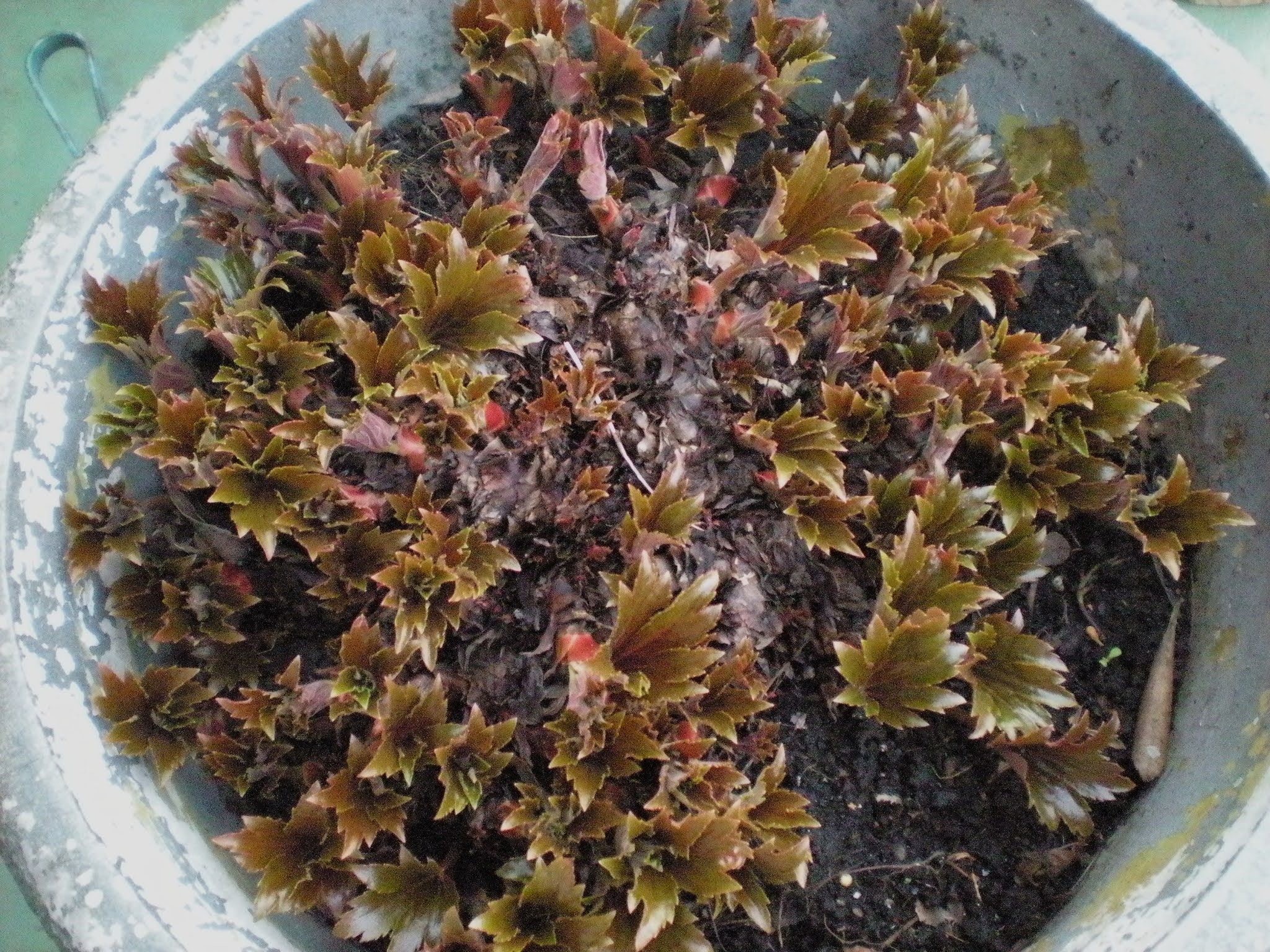
Plant of the Week: Mukdenia rossii 'Crimson Fans'

In 2007, I bought Mukdenia rossii 'Crimson Fans' after somewhere seeing--I forget now--photos of the pretty leaves. I remember that I spent $18 for a one gallon and at the time, it seemed like such an enormous sum to spend on a plant--such an extravagance for a penny-pincher like myself.


It grew. It's an easy plant with no fussy requirements at all except moist soil. (But wait.)


It's deciduous and in spring, it pushes up new leaves of bronze.


There are also these comparatively banal flowers.


The flowers persist as the leaves grow. 


Eventually, if the conditions are right, the green leaves develop a pretty crimson margin--the 'Crimson Fans'. Yes, I'm a fan of the crimson fans.


And this, my friends, is where things get tricky--"if the conditions are right" being the operative phrase. Too much sun and the leaves will burn by turning brown. Not enough sun and the leaves will stay green.


I looked through my photos for really burned leaves but to no avail. Apparently I don't like taking photos of ugly things. Anywho, above and below show leaves with small brown spots--the beginnings of the burn. 


The challenge has been finding just the right balance between sun and shade. I've had this plant both in the ground and in a pot, as the trial and error experiment went on, year after year, trying one location after another to meet--but not exceed--the sunlight requirements.

But this year I think I may have finally found it, which is a good thing since my thirteen year old plant is huge now and not so easy to move. But I will admit, I'm not really sure if this year's success is due to the plant's location or the fact that we've had a mild summer so far.


Time will tell.


Mukdenia rossii 'Crimson Fans' is a common plant now and the price has come down. There is also one called M. r. 'Karasuba' which I bought in 2016 for a much cheaper price.


Here are the two, side by side. 'Crimson Fans' on the left and 'Karasuba' on the right. 'Karasuba' is not nearly as impressive and is planted in my full shade garden for now where, admittedly, it is completely ignored.

But 'Crimson Fans'...


That there is some pretty foliage! Are you growing Mukdenia? If so, please share your tips.

Thursday, June 25, 2020

Plant of the Week: Erodium manescavi

Here is a cutie pie. Heron's Bill (Erodium manescavi) is a long-blooming, sun-loving front of the border beauty. It is also a nice rock garden plant and will reseed a little if one is lucky.


I got my plant from Robin Parer's Geraniaceae Nursery back in 2018. I knew exactly where I wanted to plant it, under full sun, in loose soil by my outer pond.


It has been growing here ever since, slowly expanding its ferny foliage and increasing its flowering stems each year.


The flowers are a cool, lilac color with slightly darker veining on the petals.


Once the flowers finish, the seed pods develop their signature "Heron's Bill" look.


But that doesn't mean the show is over as more flowers continue to bloom...


...enhanced by the soft, ferny foliage.


Here is my plant a few weeks ago:


It's about two feet wide and twelve inches high now--it's mature size.


The aforementioned "Heron's Bill" seed pods will drop a few seeds and baby plants will emerge. Not nearly enough though, if you ask me.


There you have it, my plant of the week. Thank you for visiting!